AutoDetect.ai
AutoDetect.ai
A personal project I made to learn computer vision, using a mobile app, your phone's camera, and a deep learning model to detect car damage.
- ▸ Built a mobile app using React Native, Expo, and TypeScript that captures photos with the device camera and classifies vehicles as damaged or undamanged.
- ▸ Fine-tuned a pre-trained MobileNet CNN for binary damage classification, achieving ~94% accuracy on unseen data.
- ▸ Created a Flask API that preprocesses uploaded images, and returns each prediction with a confidence score.

Readify
A social book-tracking app where readers can discover new books, log their progress, and share reviews with friends.
- ▸ Built a full-stack book-tracking platform (Next.js, TypeScript, Prisma, MongoDB) that integrates the Open Library API to let users search, paginate, and browse over 50 million titles by genre.
- ▸ Designed a social layer with follow/unfollow, ratings and reviews, and a personalized newsfeed displaying reading activity from followed users (reviews, progress, status changes, discussion posts).
- ▸ Implemented authentication with NextAuth.js, and Google OAuth 2.0 with JWT sessions for login flow.
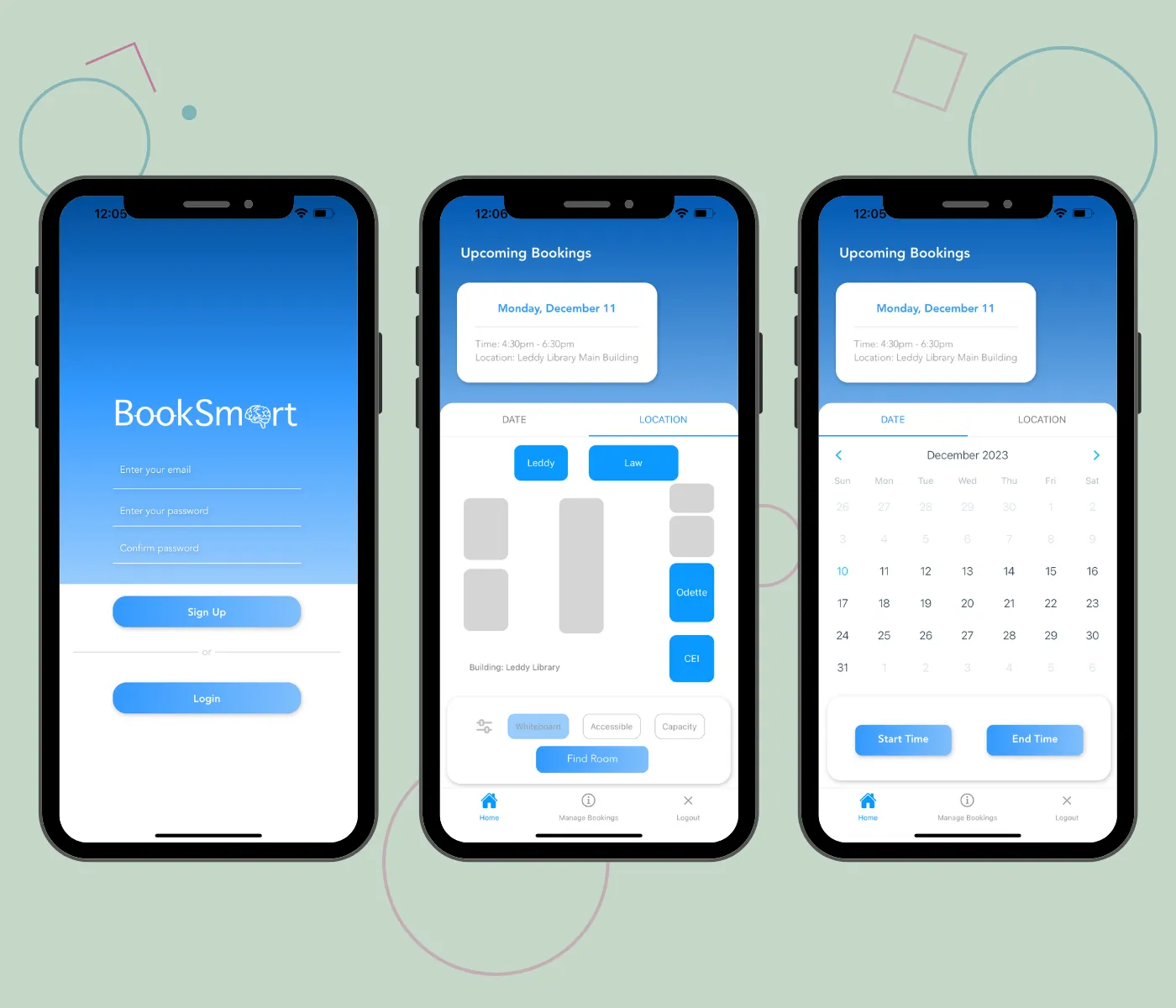
BookSmart
A mobile app for managing study room reservations across campus, suggesting next-best options using ML when availability is limited.
- ▸ Built a full-stack mobile app (React Native, Node.js, Express, MongoDB) that lets University of Windsor students find and reserve study rooms across campus.
- ▸ Implemented REST APIs for handling user accounts, searching rooms based on input parameters (location, capacity, amenities, etc.), and creating and cancelling bookings.
- ▸ Featured an interactive campus map and booking management screens so students can select buildings visually and manage upcoming reservations.
- ▸ Trained a TensorFlow classification model on room search parameters to recommend the next-best alternative when no room is available.
More on the way
I'm always building something new. Check my GitHub for the latest work in progress.
View GitHub →